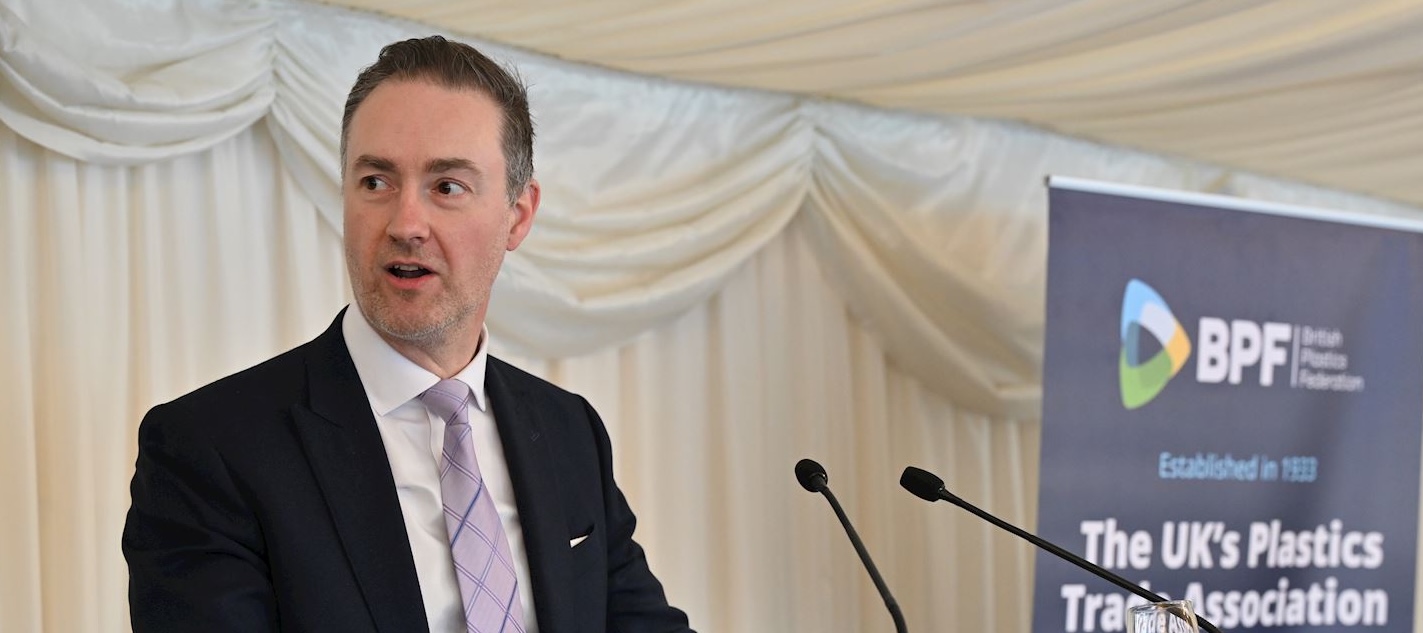





Ed Miliband, MP for Doncaster North and the UK’s Secretary of State for Energy Security and Net Zero, recently attended a high-level meeting at the House of Commons where more than 150 industry leaders, policymakers and officials gathered to discuss the future of the British plastics sector. The event was hosted by the British Plastics Federation as part of its annual parliamentary reception.
The discussions took place against a backdrop of mounting pressure on the plastic packaging industry, which is entering 2026 facing a combination of tightening regulations and rising operational costs. At the centre of concern is the Extended Producer Responsibility (EPR) framework, widely seen within the industry as a growing financial burden.
According to the British Plastics Federation, current EPR fee structures disproportionately penalise plastic materials, risking distortions across the value chain if left unchanged.
- EPR continues to be a significant challenge for the plastic packaging industry, as the fee structures are heavily weighted against plastics, said Brian Lodge from the organisation.
Recycling capacity shrinking
At the same time, the sector is under strain from broader cost pressures, particularly energy and labour. The recycling segment has been hit hardest, with multiple companies reportedly forced to shut down operations.
The result is a notable loss of capacity. Across Europe, around one million tonnes of recycling capacity is estimated to have disappeared from the market in recent years.
This contraction raises concerns about emerging bottlenecks in waste handling systems. Reduced capacity risks undermining the very objectives of stricter environmental regulation, as less infrastructure is available to process increasing volumes of plastic waste.
Eco-modulation questioned
A key component of the EPR system is eco-modulation, where producers are charged fees based on the recyclability of their packaging. In theory, this is intended to incentivise better design. In practice, however, industry representatives question whether current classifications reflect real-world recycling conditions.
- Eco-modulation may fail to deliver intended outcomes if classifications are not aligned with established design-for-recycling principles, Brian Lodge noted.
The criticism points to a broader structural issue: regulatory frameworks are evolving faster than the underlying recycling systems and technologies they depend on.
Investment continues – but risks remain
Despite the challenging environment, the industry continues to invest in both mechanical and chemical recycling technologies. Development efforts are also focused on new materials, increased use of mono-material packaging and reducing overall material consumption.
At the same time, companies are allocating resources to comply with regulatory requirements such as tethered caps. However, these investments come at a cost, and there are growing concerns that regulatory complexity and rising fees could deter further innovation.
Critics argue that technological progress alone will not be sufficient to offset the structural pressures created by increasing costs and regulatory uncertainty. Without adjustments to policy design, the risk remains that parts of the recycling ecosystem will continue to contract rather than expand.
Source: British Plastics Federation
Fact check:
Extended Producer Responsibility (EPR) is a policy approach in which producers are made financially responsible for the collection and treatment of post-consumer waste. While intended to improve recycling rates, the system can significantly increase costs for certain materials—particularly plastics—depending on how fee structures are designed.